July 28, 2026
Emergency Plumber vs Regular Plumber: Who to Call
Emergency plumber vs regular plumber: learn what qualifies as urgent, what each service costs, and how Los Angeles residents can hire a trusted pro fast.
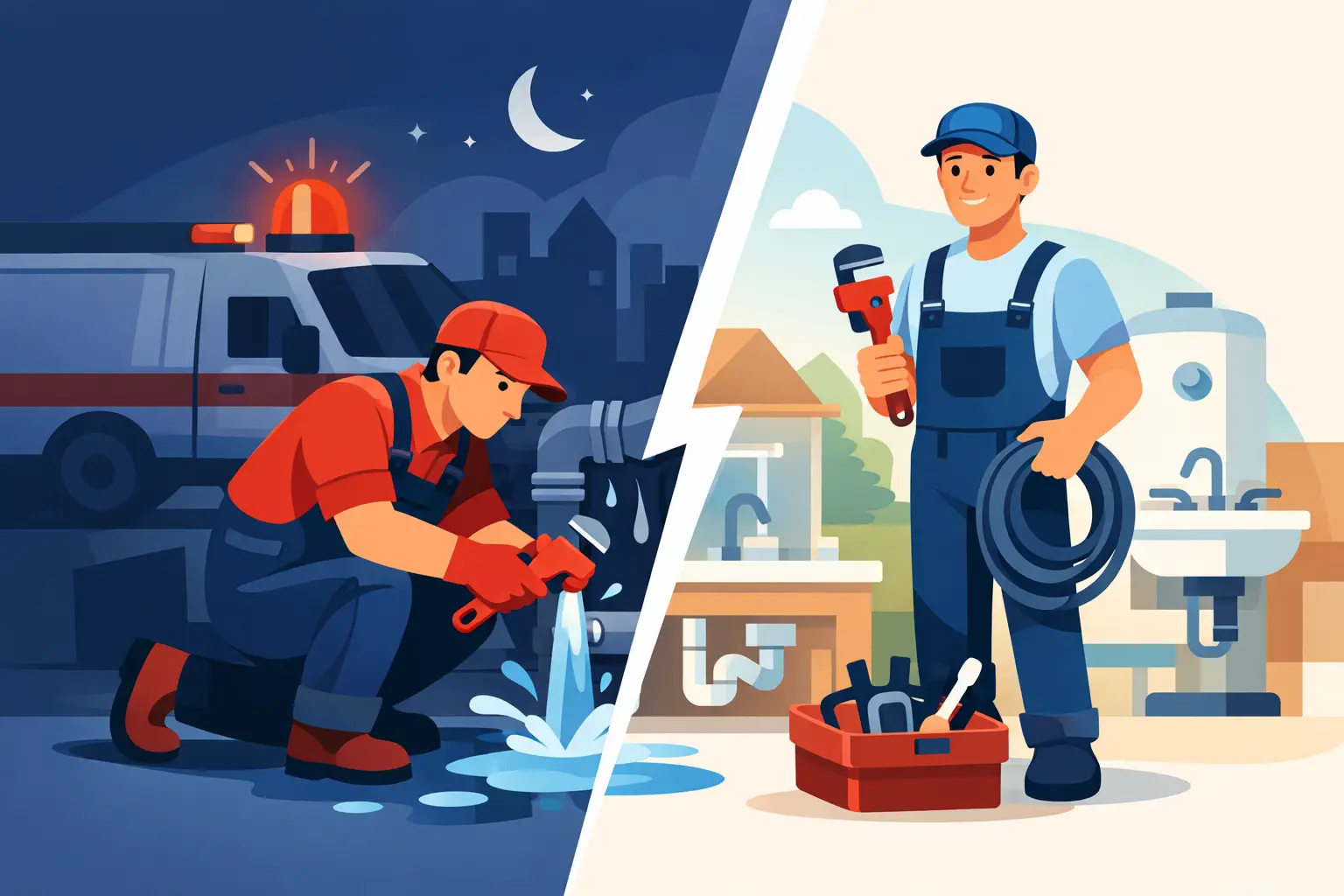
A burst supply line at 11:30 p.m. is not the time to compare vague promises or wait for a callback. The difference between an emergency plumber vs regular plumber comes down to one practical question: can the problem safely wait until standard business hours without causing more damage, creating a health risk, or leaving the property without an essential service?
For Los Angeles homeowners, tenants, and property managers, the right answer can save thousands in water damage, avoid an unnecessary after-hours bill, and get the correct specialist to the door faster. Here is how to tell which service you need and what to verify before you call.
Emergency Plumber vs Regular Plumber: The Core Difference
An emergency plumber is available outside normal business hours, typically nights, weekends, and holidays, for active problems that require immediate action. They are equipped to stabilize the situation, stop damage, restore critical service when possible, and schedule any larger repair that cannot be completed safely on the spot.
A regular plumber generally works during scheduled daytime hours. That does not mean they handle only small jobs. Licensed regular plumbers can perform major work, including water heater replacement, sewer repairs, repiping, fixture installation, gas line work, and remodel plumbing. The difference is availability and urgency, not necessarily skill level.
Emergency service usually costs more because the plumber is responding after hours, often rerouting a technician, stocking a vehicle for unpredictable calls, and arriving with limited notice. If the issue can wait, booking a regular appointment is usually the more cost-effective choice. If waiting risks flooding, contamination, property damage, or loss of essential water service, the emergency premium is often the less expensive option overall.
Problems That Usually Need an Emergency Plumber
The clearest emergency is uncontrolled water. If water is actively flowing from a broken pipe, failed supply hose, ceiling leak, or damaged water heater and you cannot stop it at the nearest shutoff valve, call an emergency plumber. First, turn off the home’s main water supply if it is safe to do so. In many Los Angeles homes, the main shutoff is near the water meter, exterior wall, garage, or utility area.
A sewer backup is another common reason to call immediately. Wastewater coming up through a shower drain, toilet, tub, or floor drain is a sanitation concern, not just an inconvenience. Avoid using sinks, toilets, dishwashers, and washing machines until a qualified plumber assesses the line. A backup may involve a local blockage, tree roots, a damaged sewer lateral, or a broader issue that needs coordination with the local utility.
Call for urgent help when you smell gas or suspect a gas line leak. Leave the area, avoid switches, flames, and electrical devices, and contact the gas utility or emergency services as appropriate before arranging a licensed plumbing professional for repairs. Gas work requires the right licensing and should never be treated as a do-it-yourself repair.
Other situations can justify emergency service depending on the property and household needs. These include a water heater leaking heavily, a toilet overflowing with no working shutoff, a complete loss of water supply, or a critical drain failure at a multi-unit property. For a property manager, one failed main line can quickly affect several tenants, which changes the urgency.
When a Regular Plumbing Appointment Is the Better Call
Many plumbing problems feel urgent but can be scheduled for the next available daytime appointment. A slowly dripping faucet, one clogged sink, low water pressure at a single fixture, a running toilet that can be shut off, or a minor leak contained in a bucket is usually suitable for a regular plumber.
The same is often true for planned work. Replacing an aging water heater before it fails, installing a new disposal, repairing a persistent drain issue, upgrading fixtures, and planning a repipe all benefit from a scheduled visit. You have more time to compare verified local plumbers, ask about specialty experience, review pricing, and confirm the scope of work.
There are exceptions. A small leak behind a wall may not look dramatic, but if the drywall is wet, the ceiling is sagging, or water is near electrical wiring, treat it as urgent. Similarly, a drain that repeatedly backs up may be a warning sign of a sewer-line problem. The decision is not based only on how much water you see. It is based on whether the condition is contained and whether delay makes damage more likely.
What Emergency Plumbing Service Typically Includes
An emergency visit often begins with diagnosis and damage control. The plumber may locate and isolate the leak, clear an immediate blockage, shut down a failing water heater, replace a damaged valve or supply connection, or inspect a sewer line with a camera when conditions allow.
Some repairs require follow-up work. For example, an overnight plumber may stop a slab leak or cap a broken pipe, then return during regular hours for wall access, restoration coordination, pipe replacement, permits, or further leak detection. That is not a sign of incomplete service. It can be the safest way to stabilize the home first and complete a larger repair with the proper materials, crew, and time.
Ask the plumber what has been repaired permanently, what has been temporarily stabilized, and what should not be used until follow-up work is completed. A clear answer protects you from assuming the problem is fully resolved when it needs additional attention.
Understanding Emergency Plumbing Costs in Los Angeles
Emergency plumbing rates vary by time of day, travel distance, the complexity of the issue, and the parts required. Many companies charge an after-hours dispatch or diagnostic fee in addition to labor and materials. A straightforward repair may be resolved in one visit, while a sewer backup, hidden leak, or water heater failure can involve diagnostic equipment and additional work.
Before authorizing work, ask for the service-call fee, the hourly or flat-rate structure, and whether the charge applies toward the repair. Request a clear explanation of the immediate repair and any recommended next steps. A trustworthy plumber should be able to explain the cause they found, the available options, and the cost difference between a temporary stabilization and a permanent repair.
Price matters, but the lowest quote is not always the safest choice during an emergency. An unlicensed or poorly documented repair can create insurance, safety, and resale problems later. For significant repairs, especially sewer, gas, water heater, or repiping work, verify that the company holds the appropriate California contractor license and carries current insurance.
How to Choose a Trusted Emergency Plumber Fast
Speed should not mean skipping basic checks. Start by confirming that the company actually provides after-hours service and can give you a realistic arrival window. “24/7” should mean a live response and an available technician, not simply an online form.
Then look for proof you can evaluate quickly: an active license, real review history, years in business, service-area coverage, and relevant specialty experience. A plumber who handles routine drain cleaning may not be the best fit for a suspected main sewer failure, while a company experienced in leak detection may be better prepared for water appearing through a ceiling.
When you call, describe the facts rather than guessing at the cause. State where the water is coming from, whether the main shutoff works, whether sewage is present, whether any fixtures are still usable, and whether the property is a house, condo, or multi-unit building. Photos and short videos can help the dispatcher prepare the right technician and equipment.
The Plumbing Connection helps Los Angeles County residents compare licensed local plumbers by emergency availability, specialties, service areas, and real review signals - without a lead broker standing between you and the provider. That makes it easier to contact a qualified company directly when every minute counts.
What to Do While You Wait for the Plumber
Your first job is to reduce damage without putting yourself at risk. Shut off the local fixture valve or the main water supply if you can do so safely. Turn off the water heater only according to its manufacturer guidance, especially if it is leaking or exposed to water. Move valuables, rugs, and electronics away from the affected area.
Do not use chemical drain cleaners before a plumber arrives. They can damage pipes, make a blockage harder to diagnose, and create a hazard for the technician. Avoid repeatedly flushing a backed-up toilet or running water into a clogged drain. In a sewer backup, keep people and pets away from contaminated water and document visible damage for your insurance records.
If water has reached electrical outlets, appliances, or a breaker panel, do not touch those areas. Contact the appropriate emergency utility or electrical professional as needed. A plumbing problem can become a broader safety issue quickly.
A good decision is not always about calling the fastest plumber. It is about recognizing when delay creates risk, shutting down the source when possible, and choosing a verified local professional who can clearly explain the repair before work begins.
Related Articles
Our Plumber Rating Methodology, Explained
See how our plumber rating methodology weighs license checks, real review signals, experience, availability, and specialties for Los Angeles County homes.
How to Choose a Whole House Repipe Plumber
Find a trusted whole house repipe plumber in Los Angeles. Compare license status, real reviews, materials, scope, timing, and fair estimates confidently.
Best Plumbing Options for Landlords in Los Angeles
Compare the best plumbing options for landlords in Los Angeles County, from licensed emergency pros to preventive service partners, with confidence today.
Need a Plumber in Los Angeles?
Compare 55+ verified plumbers with real reviews from Google, Yelp, and Angi.
Find a Plumber Near You