October 30, 2026
Tankless Versus Standard Water Heater: Which Fits?
Compare tankless versus standard water heater options for Los Angeles homes: costs, capacity, efficiency, installation needs, and when to call a pro.
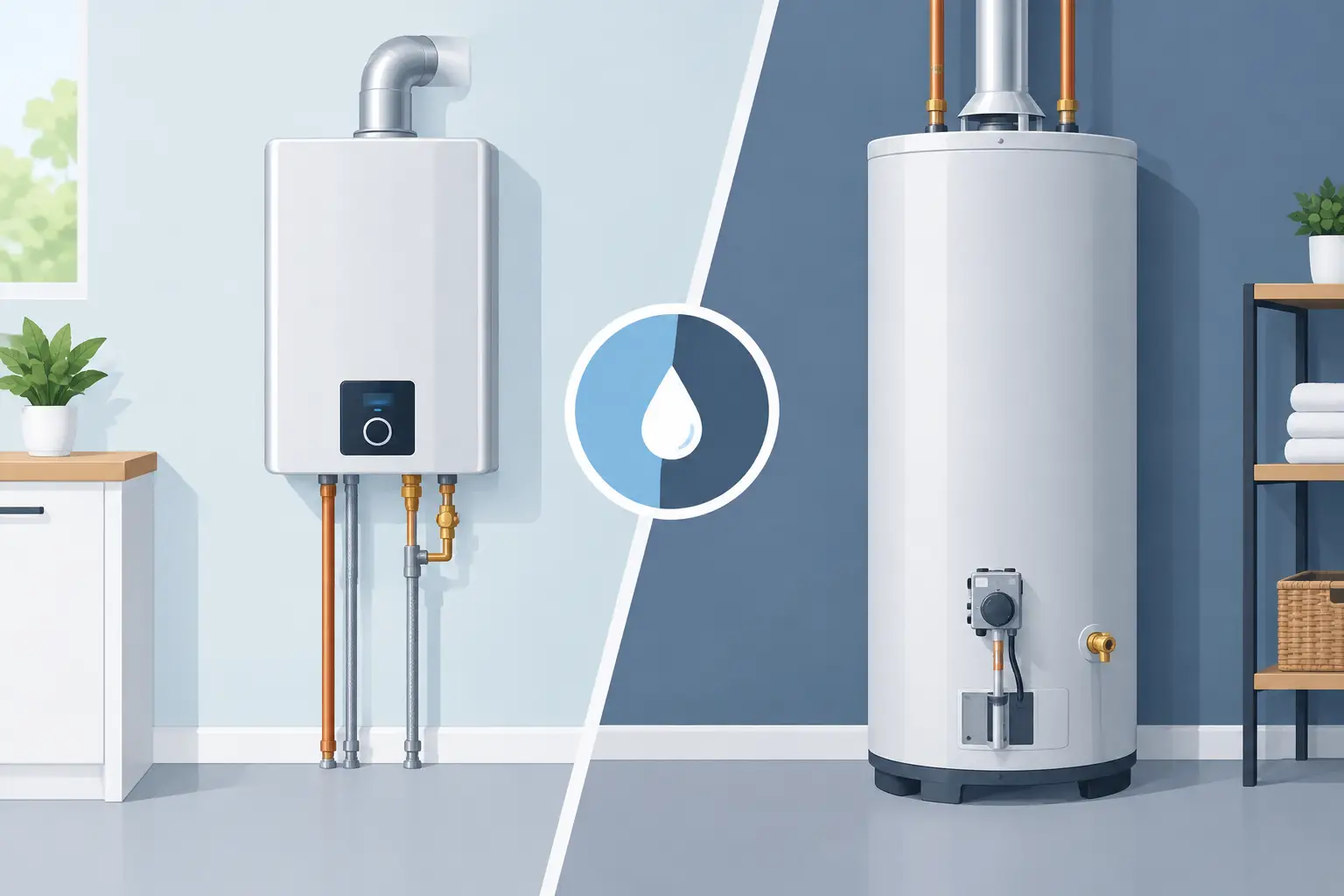
A water heater decision usually becomes urgent at the worst possible time: the old tank is leaking into a garage, the shower goes cold during a busy morning, or a property manager needs hot water restored before tenants are affected. When comparing a tankless versus standard water heater, the better choice is not automatically the newest or most efficient-looking option. It is the system that matches your household demand, fuel setup, available space, budget, and the condition of the existing plumbing.
For Los Angeles County homes, installation details matter as much as the unit itself. A qualified, licensed plumber can confirm whether your gas line, venting, electrical service, drainage, and local permit requirements support the option you want before you commit to a replacement.
Tankless Versus Standard Water Heater: The Core Difference
A standard storage-tank water heater heats and stores a set supply of water, commonly 40 to 75 gallons in a single-family home. When someone opens a hot-water fixture, the home draws from that stored supply. The tank then reheats incoming cold water to refill the reserve.
A tankless water heater heats water only when there is demand. Cold water passes through a heat exchanger, and the unit fires up to provide hot water continuously while a fixture is running. Because it does not maintain a large reservoir of heated water, it can reduce standby energy loss.
That difference shapes nearly every trade-off. A tank is generally less expensive and simpler to replace when the existing setup is in good condition. A tankless model saves space and can provide a longer run of hot water, but its upfront installation can be more involved, particularly when gas, venting, or electrical upgrades are needed.
When a Tankless Water Heater Makes Sense
Tankless systems are often a strong fit for households that regularly run out of hot water, have limited installation space, or plan to stay in the home long enough to value the efficiency benefits. They are compact, wall-mounted units, which can free up useful garage, closet, or utility-room space.
The biggest advantage is continuous hot water within the unit's capacity. A properly sized system can support a long shower without emptying a tank. That can be valuable for a household with staggered morning routines, frequent guests, or a large soaking tub.
Capacity still has limits. Tankless performance is measured by flow rate, usually gallons per minute, rather than tank size. A unit may be able to handle one shower and a sink easily but struggle if two showers, a dishwasher, and a washing machine start at the same time. Incoming water temperature also affects output. Southern California's relatively moderate groundwater temperatures can help performance, but proper sizing remains essential.
Gas-fired tankless units can have high input requirements. An older home may need a larger gas line or changes to the gas meter configuration. Depending on the model and location, the job may also require new venting, a condensate drain for a high-efficiency condensing unit, electrical work for controls, and permits. These requirements are why a low online equipment price rarely tells the full installation-cost story.
Tankless units also need maintenance. Mineral buildup can reduce heat-exchanger performance, especially in areas with hard water. Periodic flushing and inspection help protect efficiency and service life. Ask a plumber what maintenance is appropriate for your water quality and whether the quoted installation includes isolation valves that make future service easier.
When a Standard Tank Water Heater Is the Better Value
A standard water heater remains a practical choice for many Los Angeles homes and rental properties. It is familiar technology, replacement is often straightforward, and the upfront cost is typically lower when the home already has a compatible tank, vent, and gas or electrical connection.
For a household with predictable, moderate hot-water use, a properly sized tank can provide dependable service without the added complexity of a major retrofit. If the existing unit failed unexpectedly and restoring hot water quickly is the priority, a like-for-like tank replacement may be the fastest route.
Tanks do have a finite reserve. Once the stored hot water is used, the household must wait for recovery. Larger families may solve this with a bigger tank or a higher-recovery gas model, but available space and venting can limit the options.
A tank also occupies more room and has a greater leak risk simply because it holds dozens of gallons of water. In California, installation details such as seismic strapping, a properly routed temperature-and-pressure relief valve discharge line, and a drain pan where appropriate are not optional extras. They are important safeguards. A careful installer will inspect these items instead of treating the job as a basic appliance swap.
Compare Total Installation Cost, Not Just Equipment Price
The right comparison is rarely tankless unit price versus tank unit price. Compare complete, written estimates that identify the equipment model, capacity or flow rating, labor, permit handling, haul-away, required code upgrades, and any changes to gas, venting, electrical, or drainage.
A tankless installation can cost more at the start because it may involve several trades and more materials. In return, it may offer longer equipment life and lower energy use for households with suitable demand patterns. Those savings are real in some homes, but they are not guaranteed to offset a costly retrofit quickly.
A conventional tank can be the more cost-effective solution when existing connections are sound and the household does not routinely exceed its hot-water capacity. It is also easier for many owners and property managers to budget for because the scope is more predictable.
Do not choose based only on the advertised efficiency rating. The best system is one that is sized correctly and installed correctly. An undersized tankless heater can create frustrating temperature swings and weak performance. An oversized tank can waste energy maintaining more hot water than the household needs.
Los Angeles Installation Factors That Change the Answer
Local housing varies widely, from older homes with aging gas infrastructure to newer multifamily buildings with tight mechanical spaces. Before recommending a system, a licensed plumber should evaluate the existing water heater location, fuel source, vent path, gas-pipe capacity, water pressure, shutoff valves, drain access, and combustion-air requirements.
For gas water heaters, confirm whether the existing vent system is compatible with the proposed model. Tankless equipment may vent differently than a conventional atmospheric-vent tank. Never assume an old vent can be reused without inspection.
For electric options, verify the electrical panel capacity. Electric tankless water heaters can require substantial electrical service and are not a simple plug-in replacement for every home. In some situations, a heat-pump water heater may also be worth discussing, especially where electrical capacity, installation space, and energy goals support it. It is a different category of upgrade, so it should be evaluated on its own merits.
Property managers should also consider downtime and long-term service access. A system that looks efficient on paper can become inconvenient if future maintenance requires difficult access to a cramped attic, rooftop, or enclosed utility area.
How to Choose With Confidence
Start with actual use, not assumptions. Consider how many bathrooms are active at the same time, whether anyone routinely fills a large tub, how often laundry and dishwashing overlap with showers, and whether the current heater runs out of hot water. Then look at the home itself: available space, gas capacity, venting, electrical service, and the urgency of replacement.
For a quick, lower-cost replacement in a home that has performed well with a tank, another properly sized standard water heater is often the sensible choice. For homes with frequent hot-water shortages, limited floor space, and a gas system that can support the upgrade, tankless may be worth the additional investment.
When requesting estimates, compare trusted local plumbers on license verification, real review history, years in business, water-heater specialties, emergency availability, and whether they clearly explain the scope. The Plumbing Connection helps Los Angeles County consumers compare those details without lead-broker pressure or a middleman between you and the provider.
A water heater is too important to select from a single price alone. Choose a verified plumber who will inspect the installation conditions, put the full scope in writing, and recommend the system that will deliver reliable hot water for your specific home.
Get a free quote from a local plumber
Tell us what you need. Vetted plumbers in your area will reach out, usually the same day. No cost, no obligation.
Related Articles
How Plumber Reviews Help You Choose Confidently
Compare plumber reviews, license records, and service details to find a trusted Los Angeles plumber fast, with no sales pressure when repairs cannot wait.
Water Heater Repair in Los Angeles: Costs, Signs & When to Replace
Water heater not working? Common LA repair costs run $150-$500. We cover every problem (no hot water, leaking, strange noises), repair vs. replace, and how to find a good plumber.
How Plumber Licensing Records Protect LA Homes
Check plumber licensing records before hiring in Los Angeles County. See what a California license search confirms and what to verify before you call.
Need a Plumber in Los Angeles?
Compare 112+ verified plumbers with real reviews from Google and Yelp.
Find a Plumber Near You