October 4, 2026
How to Compare Plumbers Before You Hire
Learn how to compare plumbers in Los Angeles County using local license checks, real reviews, written estimates, specialties, and emergency response times.
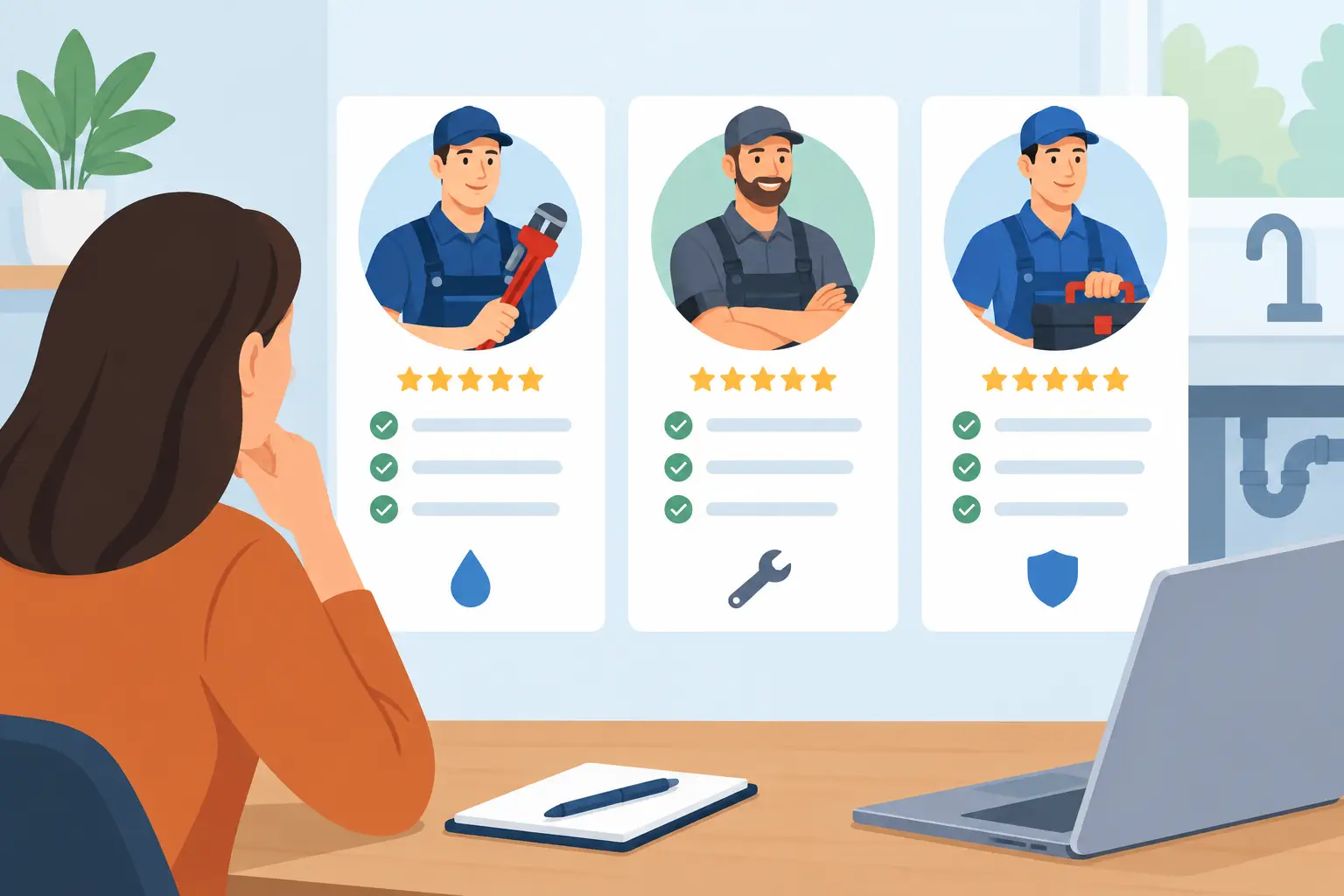
A burst supply line in Sherman Oaks or a sewer backup in Long Beach does not leave much room for guesswork. But hiring the first plumber who answers the phone can turn an urgent repair into a costly repeat visit. Knowing how to compare plumbers gives you a faster way to identify a qualified local professional, ask the right questions, and move forward with confidence.
The goal is not to find the lowest number on a screen. It is to compare licensed, properly matched providers on the details that affect the work: qualifications, reputation, availability, scope, and a clear estimate.
How to Compare Plumbers in Los Angeles County
Start by narrowing your search to plumbers who serve your specific neighborhood and handle your type of problem. Los Angeles County is large, and response time can vary substantially between a company based near your property and one dispatching from across the county. A plumber may be highly rated but still be a poor fit if they do not offer same-day service in your area.
For each company you are considering, compare these core signals together rather than relying on one number:
- Active California licensing and the license classification needed for the job
- Overall rating, review count, and the substance of recent customer feedback
- Years in business and experience with your specific plumbing issue
- Service area, scheduling availability, and emergency response options
- Written pricing approach, warranties, and whether permits may be required
A directory built for Los Angeles plumbing searches, such as The Plumbing Connection, can make this initial screening quicker by putting verified licensing details, specialties, service areas, and real review signals side by side. Still, the final choice should reflect the job in front of you, not just a ranking.
Verify the License Before Discussing Price
A valid license is the baseline, not a bonus. California plumbing work is commonly performed by contractors holding a C-36 plumbing classification, although the proper credentials can depend on the project. Ask for the contractor license number and confirm that it is active, current, and associated with the business you are speaking with.
This matters most on work involving gas lines, sewer replacements, major water damage, repiping, water heater installation, or anything that may need a permit. A licensed contractor is accountable to state requirements and is more likely to understand local inspection expectations. In Los Angeles County, those requirements can differ by city, so a plumber familiar with your municipality can help prevent avoidable delays.
Also ask whether the company carries general liability insurance and workers' compensation coverage. You do not need a lengthy insurance lecture during a leaking-pipe emergency. You do need a direct answer. If a provider is vague about licensing, insurance, or who will actually perform the work, move on.
Match the Plumber to the Actual Job
Not every plumbing company does every job equally well. A dependable drain cleaning company may be the right call for a backed-up kitchen line, but not for a complex trenchless sewer repair. A company that installs water heaters every day may be more efficient than a generalist when your unit fails.
Look for specialties that match the problem. These may include drain cleaning, hydro jetting, sewer camera inspection, trenchless sewer repair, leak detection, slab leak repair, tankless water heaters, repiping, gas line work, and commercial plumbing.
For a major project, ask how often the company completes that type of work and what their process includes. For example, a sewer repair estimate should make clear whether camera inspection, excavation or trenchless access, permits, restoration, and final testing are included. The lowest bid may leave out work another company has already accounted for.
Read Reviews for Patterns, Not Just Stars
A 4.9-star rating is useful, but it does not tell the whole story. Compare the number of reviews, how recent they are, and what customers say about the parts of service that matter to you.
For an emergency repair, pay attention to comments about arrival windows, communication, diagnosis, and whether the final invoice matched the quoted scope. For a remodel or repipe, look for feedback on workmanship, cleanliness, permits, project management, and follow-up after the job.
A few negative reviews do not automatically rule out a plumber. Service businesses occasionally face scheduling mistakes or disputes. The more useful question is whether there is a repeated pattern: surprise charges, missed appointments, incomplete repairs, pressure tactics, or calls that go unanswered after payment. Review volume also matters. Twenty recent, detailed reviews can be more meaningful than a perfect score based on only two ratings.
Check whether the business responds professionally to concerns. A calm, specific response can indicate that the company takes accountability seriously. Defensive or dismissive replies are worth noting, especially when the same complaint appears more than once.
Compare Estimates on Scope, Not a Single Total
Once you have two or three qualified options, ask for written estimates. For straightforward jobs, a company may provide a fixed price after diagnosing the issue. For larger or less predictable work, the estimate may include a range or identify conditions that could change the final cost.
Make sure each estimate describes the same scope. It should identify the problem being addressed, labor, materials, diagnostic or service-call fees, permit costs if applicable, cleanup, and any warranty. If a price seems far below the others, ask what is excluded. A low starting price can become expensive if it does not include access work, replacement parts, disposal, restoration, or after-hours charges.
You should also understand the difference between a repair and a recommendation. If a plumber finds corrosion on an older pipe, a repair may solve today's leak while repiping addresses a longer-term concern. Neither option is automatically wrong. A trustworthy provider explains the condition, the expected life of the repair, and the trade-off without using fear to force an immediate upsell.
Ask About Emergency and After-Hours Costs
Emergency availability is valuable, but it is not always free. Before authorizing work after hours, ask whether there is an additional dispatch fee, a higher labor rate, or a minimum charge. Request an estimated arrival window and ask whether the technician can provide pricing before beginning non-emergency repairs.
When active water is damaging your home, speed may be more important than gathering multiple estimates. Shut off the water if you can do so safely, protect nearby belongings, and call a licensed emergency plumber. You can still compare the essentials quickly: license, response time, diagnostic fee, and how pricing will be approved.
For a problem that can wait until regular business hours, such as a slow drain or a dripping fixture, scheduling during the day may give you more options and a lower total cost.
Look for Clear Communication Before You Commit
The way a plumbing company handles the first call often predicts the service experience. A reliable office or dispatcher should be able to confirm the service area, explain the next available appointment, provide basic pricing expectations, and tell you what information to have ready.
When the technician arrives, they should explain the diagnosis in plain language before presenting a solution. You do not need to become a plumbing expert to make a sound decision. You should be able to understand what failed, what must be repaired now, what can be monitored, and what you are approving.
For substantial work, ask who will obtain permits, whether subcontractors will be involved, how long the project should take, and how the property will be protected. Get change-order procedures in writing. Plumbing projects sometimes reveal hidden conditions behind walls or underground, but unexpected work should be explained and approved before the cost changes.
Make the Choice That Reduces Risk
The best plumber is usually not the first company shown, the cheapest estimate, or the one with the most aggressive sales pitch. It is the provider that is properly licensed, experienced with your issue, transparent about the scope and cost, and able to serve your Los Angeles County property when you need help.
Keep a short list of one or two trusted local plumbers before an emergency happens. When a leak, backup, or water heater failure does occur, you will spend less time sorting through uncertainty and more time getting the right repair underway.
Get a free quote from a local plumber
Tell us what you need. Vetted plumbers in your area will reach out, usually the same day. No cost, no obligation.
Related Articles
Is Trenchless Sewer Worth It for LA Homes?
Is trenchless sewer worth it? Compare costs, limits, and long-term value for Los Angeles homes before choosing a licensed local plumber with confidence.
Best Plumbers for Apartment Buildings in LA
Find the best plumbers for apartment buildings in Los Angeles County. Compare verified licenses, real reviews, specialties, and emergency availability.
Emergency Plumber Response Time Example Explained
See an emergency plumber response time example for Los Angeles, learn what affects arrival, and choose a licensed pro without delays or surprises.
Need a Plumber in Los Angeles?
Compare 112+ verified plumbers with real reviews from Google and Yelp.
Find a Plumber Near You