August 15, 2026
How to Identify Slab Leaks Before Damage Spreads
Learn how to identify slab leaks in Los Angeles homes, recognize urgent signs, limit damage, and contact a verified, licensed plumber fast when needed.
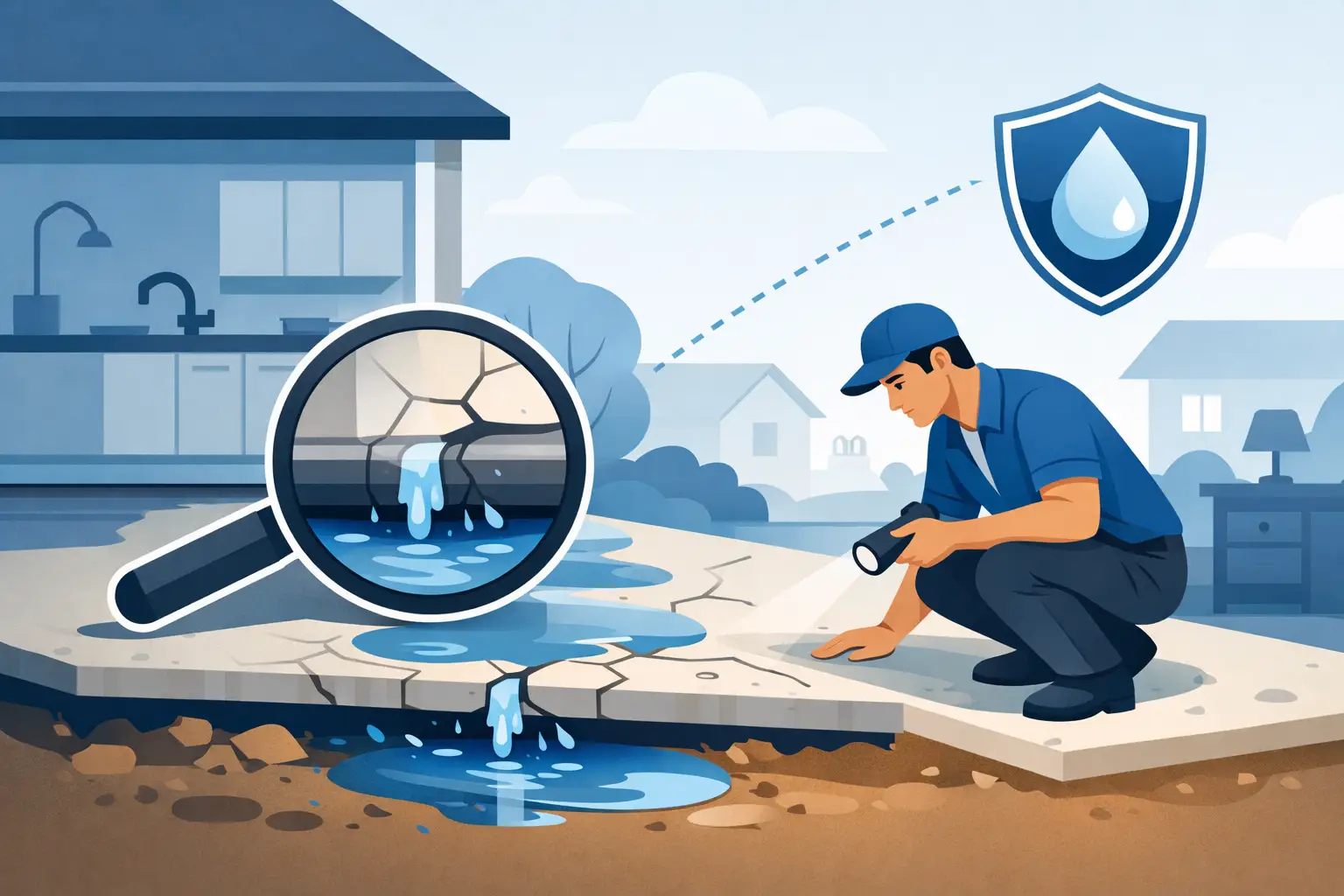
A warm spot on a tile floor, a water bill that suddenly jumps, or the sound of water moving when every fixture is off can point to a problem below your home. Knowing how to identify slab leaks early can save Los Angeles homeowners and property managers from damaged flooring, mold growth, foundation-related moisture issues, and a much larger repair bill.
A slab leak is a leak in a water or sewer line that runs beneath a concrete foundation. Because the pipe is hidden, the first clues often appear inside the home or around the exterior perimeter rather than at the source of the leak. You do not need to break concrete to recognize the warning signs, but you should move quickly once several signs line up.
How to Identify Slab Leaks in Your Home
The strongest indicator is unexplained water use. Start by making sure no faucets, appliances, irrigation systems, or water-using fixtures are running. Then check your water meter. If the low-flow indicator is moving or the meter reading changes over 15 to 30 minutes, water may be escaping somewhere in the plumbing system.
That test does not prove the leak is under the slab. A leaking toilet, irrigation line, water heater, or exterior hose bib can produce the same result. Still, it tells you that the issue deserves prompt attention, especially if you also notice indoor moisture, warm flooring, or reduced water pressure.
Pay attention to patterns, not one isolated symptom. A single warm patch may come from sun exposure or a heating appliance. A warm patch combined with a running meter and damp carpet is much more likely to be a plumbing concern.
Watch for changes in floors, walls, and finishes
Water under a slab often travels before it rises to the surface. That means the visible wet area may not sit directly above the pipe break. Look for flooring that begins to cup, separate, buckle, or lift without an obvious spill. Carpeting can feel damp at the edges, while wood and laminate may swell or lose their finish.
Tile and grout can also show movement. Cracked tiles do not automatically mean a slab leak - Southern California homes can experience normal settlement, seismic movement, and temperature-related expansion. But new cracks, loose tiles, or damp grout near a warm area should be investigated.
Walls may offer clues as well. Peeling paint, bubbling drywall, musty odors, or baseboards that darken near the floor can indicate water is migrating upward. These signs can also come from a roof leak, window leak, shower pan issue, or failed supply line in a wall. A licensed plumber can narrow down the source before anyone recommends invasive repairs.
Listen for water when the house is quiet
A steady hissing, rushing, or faint splashing sound under the floor is another common sign. Listen late at night or early in the morning, when household activity is low. Turn off the dishwasher, washing machine, ice maker, and any recirculating hot-water system first, since those can create normal plumbing sounds.
If you hear water running but cannot find a fixture that is on, check the water meter. The combination of a persistent sound and meter movement is a strong reason to call a plumber for leak detection.
Check for warm or unusually cool floor areas
Many slab leaks involve hot-water lines. When a hot line leaks beneath the foundation, sections of a concrete, tile, or wood floor can feel noticeably warm under bare feet. The warmth may be concentrated in a hallway, kitchen, bathroom, or near a water heater, but it can appear elsewhere as water and heat travel.
A cold or damp floor can also be a warning, particularly with a cold-water leak or a sewer-line issue. Do not rely only on touch. Flooring materials, sunlight, and HVAC conditions can affect surface temperature. Professional thermal imaging and electronic leak detection provide a more reliable answer.
Other Signs That Often Get Missed
Some slab leaks reveal themselves through costs and outdoor conditions before they create visible indoor damage. Review recent water bills rather than looking only at the current month. A sharp increase without a change in occupancy, landscaping, or water habits deserves attention.
You may also notice a damp or unusually green area along the foundation outside, particularly during dry weather. Water escaping from a line can saturate nearby soil. In Los Angeles County, where dry conditions make unexplained wet spots stand out, this can be a useful clue. However, irrigation leaks are common and should be ruled out first.
Keep an eye on water pressure. A pressure drop across the home can result from a supply-line leak, though mineral buildup, a failing pressure regulator, or problems with the municipal supply can also be responsible. Older homes with aging copper lines may be more vulnerable, but slab leaks can occur in homes of any age.
For quick reference, the signs most worth acting on are:
- A water meter that moves while all water use is off
- Warm, wet, or discolored areas on floors
- The sound of running water with no fixture in use
- A sudden, unexplained increase in water bills
- New moisture damage, musty odors, or flooring movement
- Reduced water pressure or recurring hot-water loss
What to Do If You Suspect a Slab Leak
First, limit additional water damage. If there is active indoor flooding, shut off the home's main water valve and protect nearby belongings. If you only suspect a hidden leak and there is no immediate water intrusion, avoid repeatedly turning the water on and off without a plan. Document meter readings, wet areas, floor temperatures, and visible damage with photos.
Next, contact a licensed plumber who specifically performs slab leak detection. This is not a job for guesswork or a quote based only on a wet floor. A qualified professional should inspect accessible plumbing, test the system, and use appropriate diagnostic tools before proposing repairs.
For urgent water loss, ask whether the company offers emergency availability and whether the technician will isolate the leak before discussing major work. Clear communication matters. You should understand what was found, how the location was confirmed, what repair paths are available, and whether drywall, flooring, or concrete work may be required.
Do not assume that jackhammering the slab is the only solution. Depending on the pipe material, leak location, number of affected sections, and the condition of the rest of the plumbing, a plumber may recommend a direct access repair, pipe rerouting, or repiping. Direct repair can be the most targeted option when the line is otherwise sound. Rerouting may reduce disruption to the slab, while repiping can make better financial sense when recurring leaks suggest the system is near the end of its service life.
The right choice depends on evidence, not sales pressure. Get a written scope that separates leak detection, plumbing repair, access work, and restoration so you can compare estimates fairly.
What Professional Slab Leak Detection Looks Like
Trusted plumbers use noninvasive methods whenever possible to locate a leak with precision. Depending on the situation, this may include acoustic listening equipment, pressure testing, thermal imaging, tracer gas testing, camera inspections for drain lines, and moisture readings. No single tool works for every leak. A hot-water supply leak may respond well to acoustic and thermal testing, while a sewer-line concern may require a camera inspection or drain testing.
Accurate diagnosis reduces unnecessary demolition, but it cannot always eliminate access work. In some cases, flooring or a small section of concrete must be opened to complete a repair. A reputable plumber will explain that trade-off before work begins rather than presenting a vague recommendation after the fact.
When comparing Los Angeles County plumbers, verify active licensing, look at real review patterns, confirm experience with leak detection and repair options, and ask about response time. The Plumbing Connection helps consumers compare verified local plumbers without lead-broker pressure, so it is easier to contact a provider directly and make a decision based on qualifications instead of a rushed sales call.
A suspected slab leak is not a reason to panic, but it is not a repair to postpone. Trust the meter, watch for multiple warning signs, and bring in a qualified local plumber before hidden water has time to become visible damage.
Get a free quote from a local plumber
Tell us what you need. Vetted plumbers in your area will reach out, usually the same day. No cost, no obligation.
Related Articles
Is Trenchless Sewer Worth It for LA Homes?
Is trenchless sewer worth it? Compare costs, limits, and long-term value for Los Angeles homes before choosing a licensed local plumber with confidence.
Best Plumbers for Apartment Buildings in LA
Find the best plumbers for apartment buildings in Los Angeles County. Compare verified licenses, real reviews, specialties, and emergency availability.
Emergency Plumber Response Time Example Explained
See an emergency plumber response time example for Los Angeles, learn what affects arrival, and choose a licensed pro without delays or surprises.
Need a Plumber in Los Angeles?
Compare 112+ verified plumbers with real reviews from Google and Yelp.
Find a Plumber Near You