August 13, 2026
How to Shut Water Main Quickly During a Leak
Learn how to shut water main valves fast, limit damage, and know when to call a verified Los Angeles County plumber for urgent leak repairs without delay.
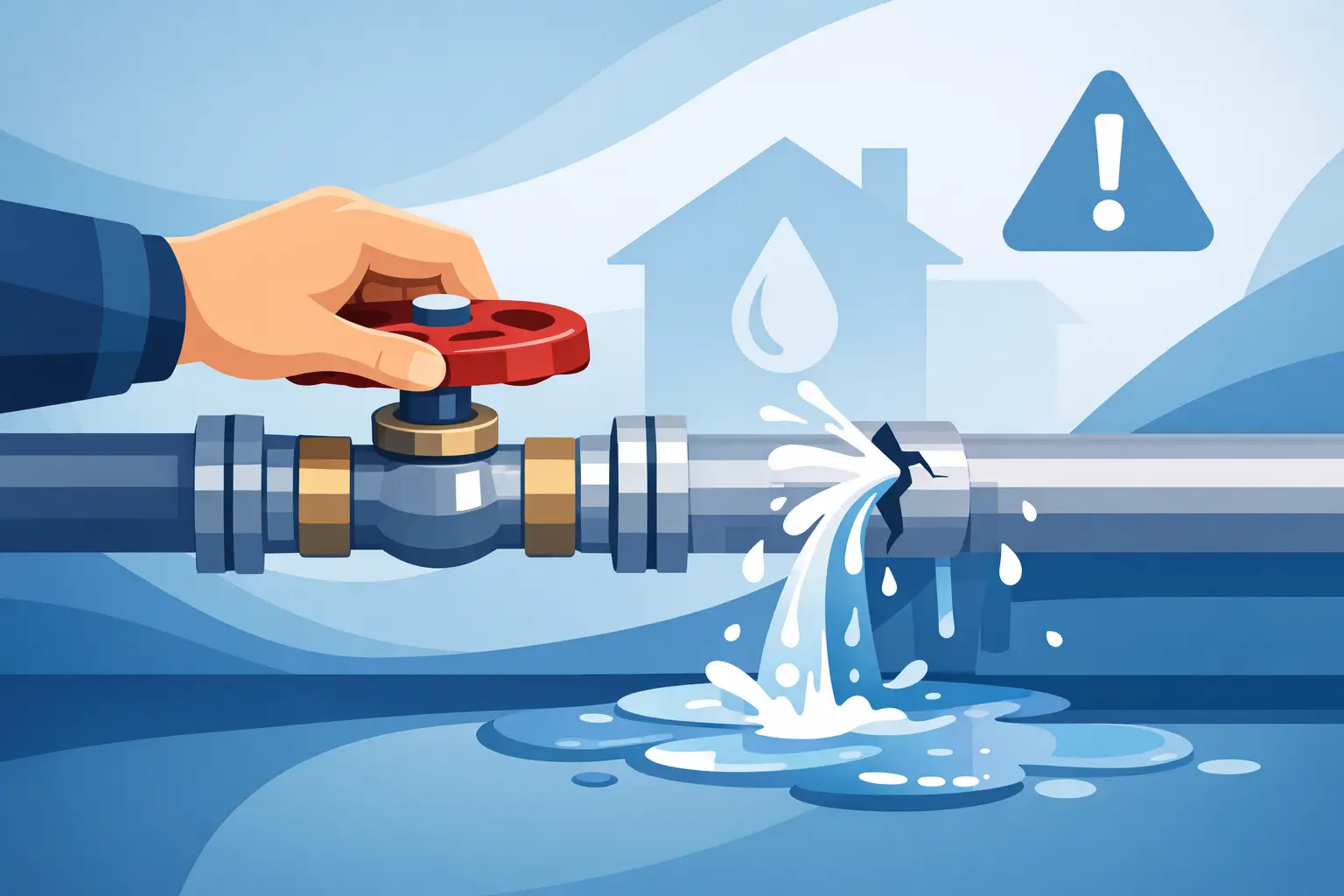
A burst supply line can soak drywall, flooring, and cabinets in minutes. Searches for “how to shut water main” usually happen when water is already where it should not be, so the goal is simple: stop the flow safely, protect the home, then bring in qualified help if the leak is not a quick fixture repair.
For Los Angeles County homeowners, the main shutoff is often near the front property line, beside the water meter, or on the side of the house where the water service enters. The exact location varies by neighborhood, home age, and whether the property has been remodeled. Find it before an emergency, label it, and make sure every adult in the household knows how to use it.
How to Shut Water Main Service to Your House
Start by confirming that the water is coming from your plumbing, not from rain, a sprinkler system, or a nearby appliance that can be isolated separately. If a pipe is spraying, a toilet will not stop running, or water is pouring from a wall or ceiling, turn off the home’s main water supply immediately.
The main shutoff valve is typically a round wheel handle or a lever-style ball valve. A wheel handle closes when turned clockwise, or to the right. Turn it slowly but firmly until it stops. Do not force a valve that is badly rusted or frozen in place. A lever-style valve is open when the handle runs parallel to the pipe; rotate it one quarter turn so it sits perpendicular to the pipe to close it.
After closing the valve, open a cold-water faucet at the lowest practical point in the house, such as a first-floor sink or exterior hose bib. This releases pressure in the interior lines and helps confirm whether the supply is off. Some water will continue to run briefly as the pipes drain. That is normal.
If the leak is severe, move quickly through these actions:
- Shut off the main valve serving the home.
- Turn off electricity to affected areas at the breaker only if you can reach the panel without standing in water.
- Move valuables, rugs, and furniture away from the wet area.
- Place buckets or towels under active drips where it is safe to do so.
- Call a licensed plumber if the source is hidden, a pipe has failed, or the valve will not close.
Do not enter standing water if outlets, extension cords, appliances, or electrical panels may be involved. In that situation, keep clear of the area and contact emergency services or a qualified professional as appropriate.
Find the Correct Main Shutoff Valve
Many homes have more than one valve, and not all of them stop water to the entire property. Under-sink valves control individual faucets. A toilet stop valve controls the toilet. A water heater may have a cold-water inlet shutoff. These smaller valves are useful when the problem is limited to one fixture, but they will not stop a leak in a wall, slab line, or other part of the home’s plumbing system.
Look first for an interior main shutoff. In Southern California homes, it may be in a garage, utility closet, basement where applicable, crawlspace access area, or on an exterior wall close to the water heater. It may also be near the pressure regulator. Interior shutoffs are generally the best option because they are designed for the homeowner’s use and are easier to access during an emergency.
If you cannot find an interior valve, check near the water meter at the front of the property. The meter is often inside a covered box at ground level, near a sidewalk, driveway, or curb. There may be a customer-side shutoff valve after the meter that you can use. Avoid tampering with the utility-owned meter, meter seal, or street-side valve. Those components may require a specialized key and are not intended for routine homeowner operation.
Apartment and condo residents should not assume the building’s exterior valve serves only their unit. Your unit may have an individual shutoff in a utility closet, laundry area, or under a sink. If the leak is significant and you cannot isolate it, notify building management right away while contacting an emergency plumber if your lease or HOA procedures allow it.
If the Valve Will Not Turn
Older gate valves can seize from corrosion, especially if they have not been exercised for years. Pushing harder can break the stem or cause a slow leak around the valve packing. If the valve resists normal hand pressure, stop. Use an alternate interior shutoff if one exists, such as a valve before the water heater or a fixture-level valve for a localized leak.
A licensed plumber can replace an unreliable shutoff valve and inspect the pressure regulator, supply line, and meter-side connection. This is a worthwhile preventive repair. A main valve that cannot close turns a manageable leak into a much larger water-damage claim.
Know When a Fixture Valve Is Enough
You do not always need to shut off water to the entire house. If a faucet supply line is leaking beneath one sink, close the two small valves under that sink. If a toilet is overflowing, close the valve behind or beside the toilet by turning it clockwise. For a leaking washing machine hose, close the dedicated laundry valves.
The trade-off is speed versus certainty. Fixture valves preserve water service elsewhere in the home, but only work if you can clearly identify the source and safely reach the valve. Shut off the main when water is coming through a ceiling, from inside a wall, beneath flooring, from an unknown location, or at a rate you cannot control.
A water heater leak requires extra care. If water is pooling around an electric water heater, do not touch the unit until the electrical risk has been addressed. Once the water supply is shut off, avoid turning an electric water heater back on until a plumber has confirmed the tank is full and safe to operate. Heating elements can burn out if energized in an empty tank.
What to Do After You Shut Off the Water
Turning off the water stops additional flow, but it does not identify the failure. Take clear photos and short videos of the source, visible damage, and the valve position before cleanup obscures the evidence. This can help a plumber diagnose the issue and may support an insurance claim.
Then remove standing water when safe, increase ventilation, and keep the affected area accessible. Do not cut into walls, disconnect gas appliances, or attempt a permanent repair with tape or improvised fittings. A temporary patch can fail under pressure when the water is restored.
When you call for help, describe what happened, where the leak is located, whether the main valve is closed, and whether water reached electrical equipment. Ask whether the plumber is licensed, available for emergency service, and equipped to handle the specific repair. For a slab leak, failed main line, sewer backup, or extensive water damage, the right specialty matters as much as response time.
The Plumbing Connection helps Los Angeles County consumers compare trusted, verified local plumbers by licensing details, real review signals, emergency availability, and specialty. That gives you a clearer path than calling the first name that appears during a stressful leak.
Make the Next Emergency Easier
Test your main shutoff valve once or twice a year when there is no emergency, then return it fully to the open position. If it is stiff, leaking, unmarked, or difficult to reach, schedule service before it becomes urgent. Keep a flashlight nearby, clear stored items away from the valve, and show household members where it is.
The best time to learn how to shut the water main is on a dry, ordinary day. A few minutes of preparation can save you from making a high-pressure decision while water is spreading through your home.
Get a free quote from a local plumber
Tell us what you need. Vetted plumbers in your area will reach out, usually the same day. No cost, no obligation.
Related Articles
Is Trenchless Sewer Worth It for LA Homes?
Is trenchless sewer worth it? Compare costs, limits, and long-term value for Los Angeles homes before choosing a licensed local plumber with confidence.
Best Plumbers for Apartment Buildings in LA
Find the best plumbers for apartment buildings in Los Angeles County. Compare verified licenses, real reviews, specialties, and emergency availability.
Emergency Plumber Response Time Example Explained
See an emergency plumber response time example for Los Angeles, learn what affects arrival, and choose a licensed pro without delays or surprises.
Need a Plumber in Los Angeles?
Compare 112+ verified plumbers with real reviews from Google and Yelp.
Find a Plumber Near You