October 18, 2026
Sewer Camera Inspection Checklist for LA Homes
Use this sewer camera inspection checklist to document pipe issues, compare repair options, and hire a verified Los Angeles plumber with confidence now.
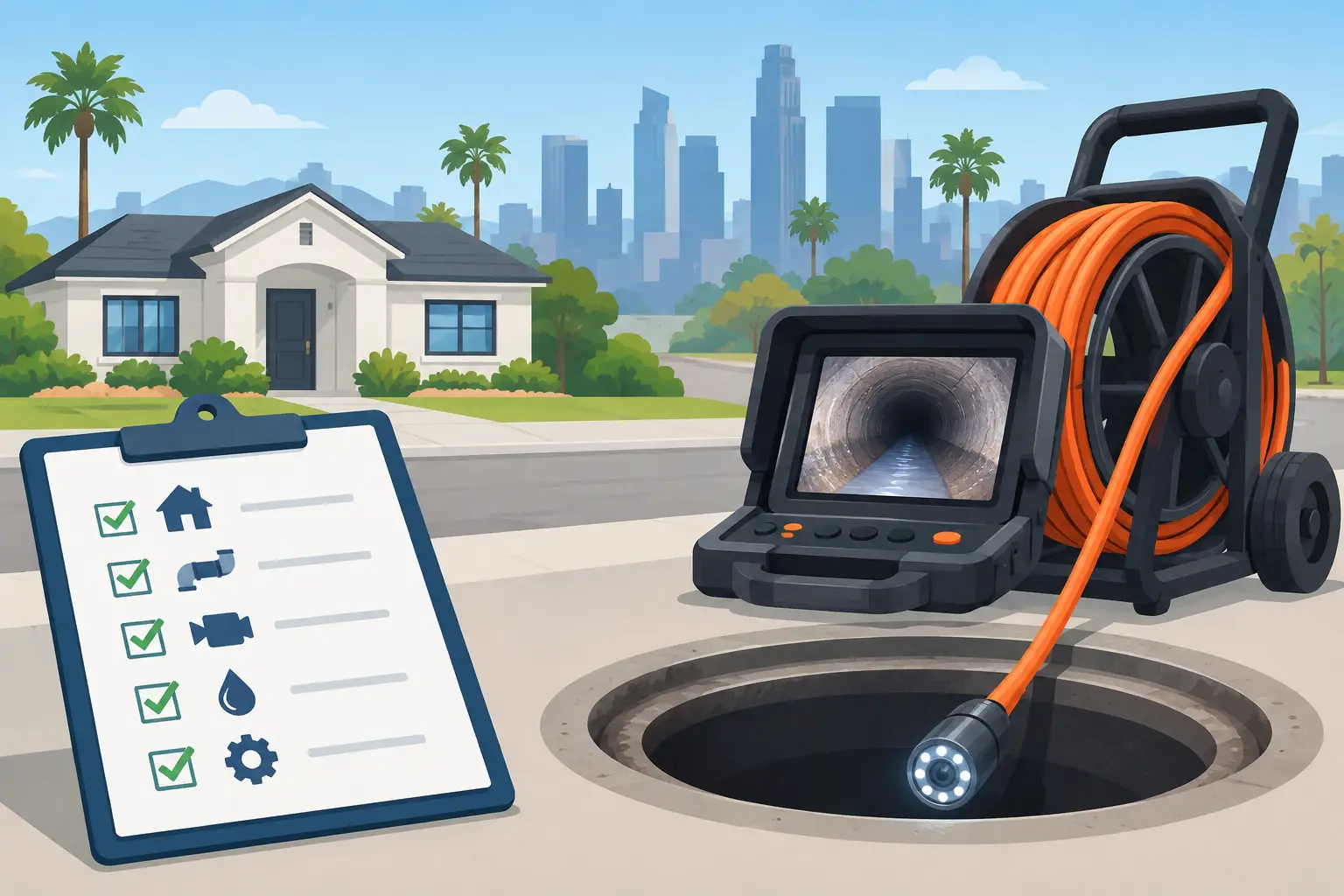
A sewer backup rarely starts with a dramatic flood. More often, it begins with a slow tub drain, a toilet that gurgles after the washer runs, or a recurring clog that returns days after snaking. A sewer camera inspection checklist helps Los Angeles homeowners and property managers make sure the inspection produces useful evidence, not just a vague recommendation for expensive work.
A camera inspection can reveal roots, cracked pipe, offset joints, heavy scale, grease buildup, or a collapsed section. But the quality of the result depends on the preparation, the equipment, and whether the plumber explains what the video actually shows. Use this checklist to ask the right questions, document the condition of the line, and compare repair recommendations with confidence.
Before the Sewer Camera Goes In
Start by identifying the symptoms and where they occur. Tell the plumber whether the issue affects one fixture, a bathroom group, the kitchen line, or every drain in the property. A single slow sink may be a local drain problem. Multiple fixtures backing up at once often point to a blockage or damage farther down the sewer lateral.
Ask whether the line needs to be cleared before the camera is used. A camera cannot see through standing sewage, heavy sludge, or a solid blockage. In many cases, a technician will cable or hydro jet the line first, then perform the camera inspection. That is not automatically an upsell. It can be necessary to obtain a clear view. Still, ask for the reason, the price, and whether camera work is included in the clearing service.
Before work starts, confirm the inspection scope. The plumber should explain which line will be inspected, where they will access it, and whether the camera can likely reach the connection to the city sewer. On older Los Angeles properties, cleanouts may be buried, damaged, or located in a side yard, driveway, crawlspace, or utility area. Limited access can affect what the camera can document.
Sewer Camera Inspection Checklist During the Visit
Stay available during the inspection if possible. You do not need to stand over the technician, but you should be able to review major findings before the equipment is packed away. A trusted plumber should be willing to show you what is on the screen and explain it in plain language.
Use this sewer camera inspection checklist to confirm the inspection includes the details that matter:
- Clear video from the point of entry: Confirm where the camera enters the line and whether the footage begins after the cleanout, fixture drain, or another access point.
- Pipe material and approximate condition: Ask whether the line appears to be clay, cast iron, ABS, PVC, Orangeburg, or another material. Age and material affect the likely repair options.
- The location of every significant defect: Roots, cracks, separated joints, bellies, scale, corrosion, grease, and collapsed areas should be identified individually rather than described as a general bad pipe.
- Distance markings: The video should show footage measurements or the technician should provide approximate distances from the access point to each issue.
- Pipe direction and flow: Ask whether the camera reached the property connection and whether the line has adequate slope. A camera can indicate standing water or a belly, although final grading requirements may require additional evaluation.
- A locator reading above ground: For a repair recommendation, the plumber should locate the camera head from the surface and mark the problem area. This helps confirm whether the issue is under landscaping, a slab, a driveway, or public right-of-way.
- The boundary of responsibility: Confirm whether the defect appears on the private sewer lateral, near the property line, or in the municipal main. Responsibility can change at this boundary, and city involvement may be needed.
- A saved copy of the inspection: Request the video, photos, or a written report before approving major work. It gives you a record for a second opinion, insurance conversation, or future maintenance file.
Not every inspection will reach the full length of the line. A severe blockage, collapsed pipe, tight bend, or damaged cleanout can stop the camera. That does not mean the inspection has failed. It means the plumber should clearly state what was inspected, where progress stopped, and what evidence supports the next recommendation.
How to Interpret Common Camera Findings
Tree roots are common in older Los Angeles neighborhoods, particularly where clay pipe joints have shifted over time. Light root intrusion may be removable with cutting or hydro jetting, followed by scheduled maintenance. Dense roots that repeatedly return can signal broken joints or cracks that need spot repair, lining, or replacement. The right answer depends on how badly the pipe is damaged and how often the line backs up.
Cast iron pipe often develops internal scale and corrosion. A camera may show a rough, narrowed interior that catches paper and waste. Descaling or hydro jetting can improve flow when the pipe still has structural integrity. If the pipe walls are badly deteriorated, cleaning alone may offer only temporary relief.
An offset joint means two pipe sections no longer align properly. A belly is a low area where wastewater and debris collect. Both can create recurring clogs, but they are not identical problems. An offset may be repairable at one location, while a substantial belly may require excavation and regrading. Do not accept a broad diagnosis without seeing the specific footage and surface location.
A camera also has limits. It can show visible conditions inside the line, but it cannot always confirm the exact depth of a pipe, the full extent of damage behind a blockage, or whether a line passes a pressure test. For complicated failures, the plumber may recommend locating, testing, or limited excavation before presenting a final repair scope.
Compare Repair Recommendations Before You Approve Work
A camera inspection is often the first step, not the repair itself. If a plumber recommends trenchless lining, pipe bursting, spot repair, hydro jetting, or full replacement, ask what condition makes that method appropriate for your line.
Trenchless options can reduce disruption to landscaping, patios, and driveways. They are not always the best fit. Pipe lining may not solve a severe belly, and pipe bursting can require access pits and may be unsuitable around certain utility conflicts. Conventional excavation can be more disruptive, but it may be the sounder choice when pipe slope must be corrected or sections have collapsed.
Request an itemized estimate that separates diagnostics, cleaning, permits if required, repair method, restoration, and warranty terms. For a substantial sewer project, compare at least two written opinions using the same video evidence. A lower price is not automatically better if it leaves out locating, restoration, permit work, or the actual cause of the failure.
For occupied rental properties, also consider disruption. Ask how long drains will be unavailable, whether the crew needs interior access, and what temporary precautions tenants should take. Clear expectations reduce avoidable conflict when repairs involve a shared line or multi-unit building.
Verify the Plumber, Not Just the Camera Footage
A clear video is valuable, but the contractor proposing repairs should also be qualified to perform them. Confirm that the business holds an active California plumbing contractor license, typically a C-36 classification, and that the license information matches the company name on the estimate. Verify insurance, review history, years in business, service area, and emergency availability when the situation cannot wait.
Look for consistent, detailed reviews that mention sewer diagnostics, trenchless work, cleanup, communication, and follow-through. A company with real reviews and a documented local track record is easier to evaluate than a contractor who offers a verbal diagnosis with no video, no locator marks, and no written scope.
The Plumbing Connection helps Los Angeles County consumers compare verified local plumbers by licensing details, specialties, ratings, and service coverage, without adding lead-broker pressure between you and the contractor.
Keep the Record for the Next Problem
Save the inspection video, report, estimate, and surface markings in your property records. Label the file with the address, date, access point, and any measured locations. If you sell the home, manage multiple units, or face a future backup, that documentation can prevent the next plumber from starting at zero.
The most useful camera inspection does more than identify a clog. It gives you a clear picture of what is wrong, where it is, who is responsible, and what repair path makes practical sense before you spend money.
Get a free quote from a local plumber
Tell us what you need. Vetted plumbers in your area will reach out, usually the same day. No cost, no obligation.
Related Articles
Is Trenchless Sewer Worth It for LA Homes?
Is trenchless sewer worth it? Compare costs, limits, and long-term value for Los Angeles homes before choosing a licensed local plumber with confidence.
Best Plumbers for Apartment Buildings in LA
Find the best plumbers for apartment buildings in Los Angeles County. Compare verified licenses, real reviews, specialties, and emergency availability.
Emergency Plumber Response Time Example Explained
See an emergency plumber response time example for Los Angeles, learn what affects arrival, and choose a licensed pro without delays or surprises.
Need a Plumber in Los Angeles?
Compare 112+ verified plumbers with real reviews from Google and Yelp.
Find a Plumber Near You