August 7, 2026
Sewer Lining Versus Pipe Bursting Compared
Compare sewer lining versus pipe bursting for Los Angeles properties. Understand cost, access, soil, damage, and how to choose a verified plumber.
A sewer backup is stressful enough without being handed two unfamiliar repair options. When a camera inspection shows a damaged underground line, the choice often comes down to sewer lining versus pipe bursting. Both are trenchless methods that can avoid tearing up an entire yard, driveway, or slab. But they solve different problems, and the lower initial quote is not always the better repair.
For Los Angeles County homeowners and property managers, the right decision depends on the pipe's condition, location, material, access points, and the work required to meet local code. A qualified, licensed plumber should inspect the line with a sewer camera before recommending either method.
What Sewer Lining Does
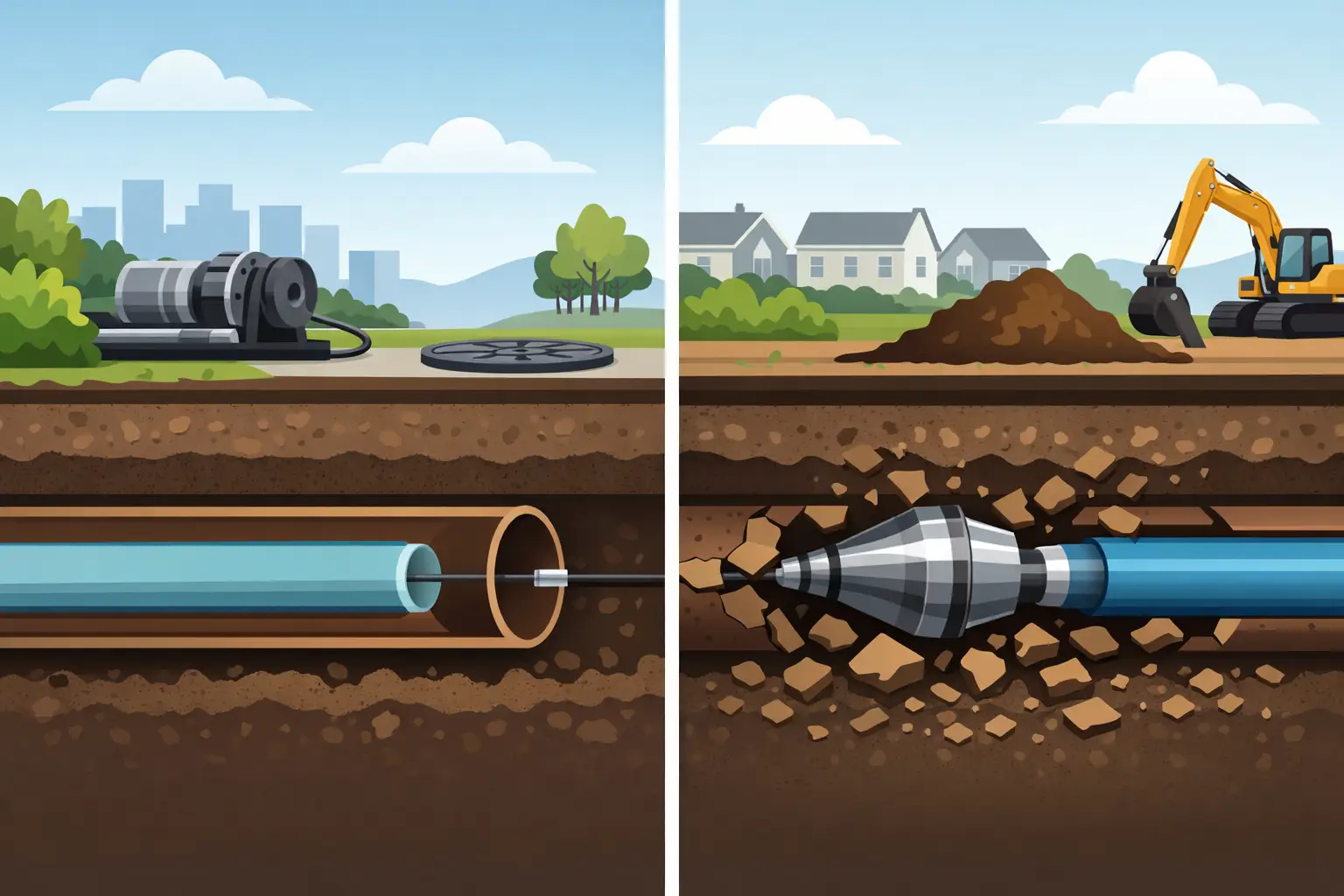
Sewer lining, often called cured-in-place pipe lining or CIPP, creates a new pipe inside the existing one. The plumber cleans the damaged sewer line, inserts a resin-saturated liner, inflates it against the old pipe, and cures it until it hardens. The result is a continuous, jointless inner pipe.
This approach is usually best when the existing pipe is still mostly intact. It can seal cracks, small offsets, leaking joints, root intrusion damage, and areas of corrosion without removing the old pipe. Because the work is often performed through existing cleanouts or small access points, lining can be especially useful beneath finished landscaping, patios, garages, and interior floors.
The key limitation is structural condition. A liner needs a usable host pipe to hold its shape during installation. If a section has collapsed, is severely crushed, has a major belly, or is missing altogether, lining may not be a reliable option. A good contractor will show you the camera footage rather than asking you to accept that assessment on faith.
Benefits and trade-offs of lining
The biggest benefit is reduced excavation. Less digging can mean less restoration work around concrete, hardscape, mature landscaping, or tight side yards. Lining also eliminates many old pipe joints, which are common entry points for tree roots.
However, lining reduces the inside diameter of the pipe slightly. In a properly sized residential sewer, that reduction is generally modest, but it matters if the line was already undersized or has chronic flow problems. Lining may also require careful reinstatement of branch connections, particularly on larger properties or multifamily buildings.
What Pipe Bursting Does
Pipe bursting replaces the old sewer line rather than coating it from the inside. A plumber pulls a bursting head through the existing pipe path. The head breaks apart the old pipe while pulling a new high-density polyethylene, or HDPE, pipe into place behind it.
This can be a strong solution for old clay, cast iron, Orangeburg, or other deteriorated sewer pipes that are too damaged for lining. The new pipe is continuous and durable, with heat-fused connections rather than the joints found in many older systems. Pipe bursting can also allow a plumber to install a slightly larger line in some situations, though site conditions and code requirements determine whether that is practical.
It is still considered trenchless, but it is not no-dig. The crew generally needs an entry pit and an exit pit, often near the house connection and the city sewer connection. Those pits are far smaller than a full trench, yet they can affect landscaping, sidewalks, or other surfaces near each end of the line.
Benefits and trade-offs of pipe bursting
Pipe bursting is often the better long-term answer when a pipe has failed structurally. It does not depend on the old line remaining round or stable, and it provides a completely new pipe along the existing route.
The trade-off is that bursting needs enough room and a suitable path for the pulling equipment. It can be difficult around certain utilities, heavily congested underground areas, sharp pipe bends, or locations where the old line runs too close to sensitive structures. The force involved also makes a thorough utility-location process essential.
Sewer Lining Versus Pipe Bursting: The Deciding Factors
Neither technique wins every job. The most reliable recommendation begins with evidence from a camera inspection, locating equipment, and a review of access conditions.
Choose sewer lining when the pipe is damaged but still structurally serviceable. Cracked cast iron, root-intruded clay pipe, leaking joints, and moderate corrosion are common lining candidates. It is often a practical choice when protecting a finished yard, tile floor, driveway, or patio is a priority.
Choose pipe bursting when the pipe needs to be replaced, not reinforced. A collapsed section, extensive deformation, severe deterioration, or failed Orangeburg line may point toward bursting. It is also worth considering when the existing pipe is too small and replacement offers an opportunity to improve capacity.
The line's slope matters as well. Neither method automatically corrects a major belly, which is a low section where waste and water collect. If poor grade is the central issue, excavation and regrading may be necessary. A plumber who promises a trenchless fix for every camera finding is not giving you the full picture.
Cost in Los Angeles County
Prices vary widely because the repair method is only one part of the job. Sewer depth, length, pipe diameter, soil conditions, access, permits, city connection requirements, cleanup, and surface restoration all affect the final number.
Lining can cost less when it avoids expensive demolition and restoration. For example, avoiding removal and replacement of a long concrete driveway may make lining financially attractive even if its per-foot installation cost is substantial. Pipe bursting may deliver better value when the old line is too compromised for lining, because attempting to line a failing pipe can create a short-lived solution and a second repair bill.
Ask for an itemized written estimate that identifies the repair length, pipe material, access pits or excavation, permit handling, inspection requirements, restoration exclusions, warranty terms, and whether the quote includes reconnection of branches. For a property manager, also ask whether the work plan accounts for tenant access, service interruptions, and after-hours coordination.
Do not compare proposals on price alone. One estimate may cover a targeted spot repair, while another covers the full lateral from the building to the property connection. Both can be legitimate scopes, but they are not equivalent repairs.
Permits, Utilities, and Local Conditions
Sewer work in Los Angeles County can involve city-specific permit rules and inspection requirements. The property owner is usually responsible for the private sewer lateral, but the exact boundary between private and public responsibility can vary by jurisdiction. A licensed plumbing contractor should explain where the proposed work begins and ends before the job starts.
Older Los Angeles homes add another layer of complexity. Mature tree roots, clay laterals, aging cast iron, hillside access, narrow lots, and concrete hardscape are common conditions. In some neighborhoods, the sewer path may cross under garages, additions, or accessory dwelling units. That is why a current camera inspection and precise line locating matter more than a generic recommendation.
Before work begins, confirm that underground utilities will be marked and that the contractor carries the appropriate California licensing and insurance. If a contractor cannot provide licensing details, a clear scope, or camera evidence, keep comparing.
Questions to Ask Before You Approve the Work
You do not need to become a trenchless technology expert. You do need clear answers. Ask whether the pipe is a candidate for lining and why, whether any sections are collapsed or holding standing water, and how the contractor will handle branch connections.
Also ask where access pits would be located for pipe bursting, what surfaces may need restoration, whether permits and inspections are included, and what warranty applies to materials and labor. Request the pre-repair camera video and, when possible, a post-repair video. These records are useful for future maintenance, property sales, and insurance discussions.
For an urgent backup, confirm the immediate plan too. The crew may need to clear the blockage and stabilize the line before a permanent lining or bursting project can be scheduled. Emergency drain clearing and permanent sewer replacement are related services, but they are not the same scope of work.
Find the Right Local Sewer Specialist
Trenchless sewer repair is specialized work. Look for a local plumber with verified licensing, real review history, documented sewer and trenchless experience, and the equipment to inspect the line before proposing a repair. The Plumbing Connection helps Los Angeles County residents compare trusted plumbers by specialties, service areas, availability, and public licensing information, without a middleman sales call.
A careful diagnosis may take a little longer than a quick quote, but it is usually the fastest route to a repair that fits the pipe, the property, and the budget. Protect your home by choosing the method based on evidence, then hire a qualified local professional who will put the scope and warranty in writing.
Get a free quote from a local plumber
Tell us what you need. Vetted plumbers in your area will reach out, usually the same day. No cost, no obligation.
Related Articles
Is Trenchless Sewer Worth It for LA Homes?
Is trenchless sewer worth it? Compare costs, limits, and long-term value for Los Angeles homes before choosing a licensed local plumber with confidence.
Best Plumbers for Apartment Buildings in LA
Find the best plumbers for apartment buildings in Los Angeles County. Compare verified licenses, real reviews, specialties, and emergency availability.
Emergency Plumber Response Time Example Explained
See an emergency plumber response time example for Los Angeles, learn what affects arrival, and choose a licensed pro without delays or surprises.
Need a Plumber in Los Angeles?
Compare 112+ verified plumbers with real reviews from Google and Yelp.
Find a Plumber Near You