October 2, 2026
A Water Heater Replacement Case Study in LA
This water heater replacement case study shows how an LA homeowner compared licensed plumbers, controlled costs, and chose a safe, code-ready installation.
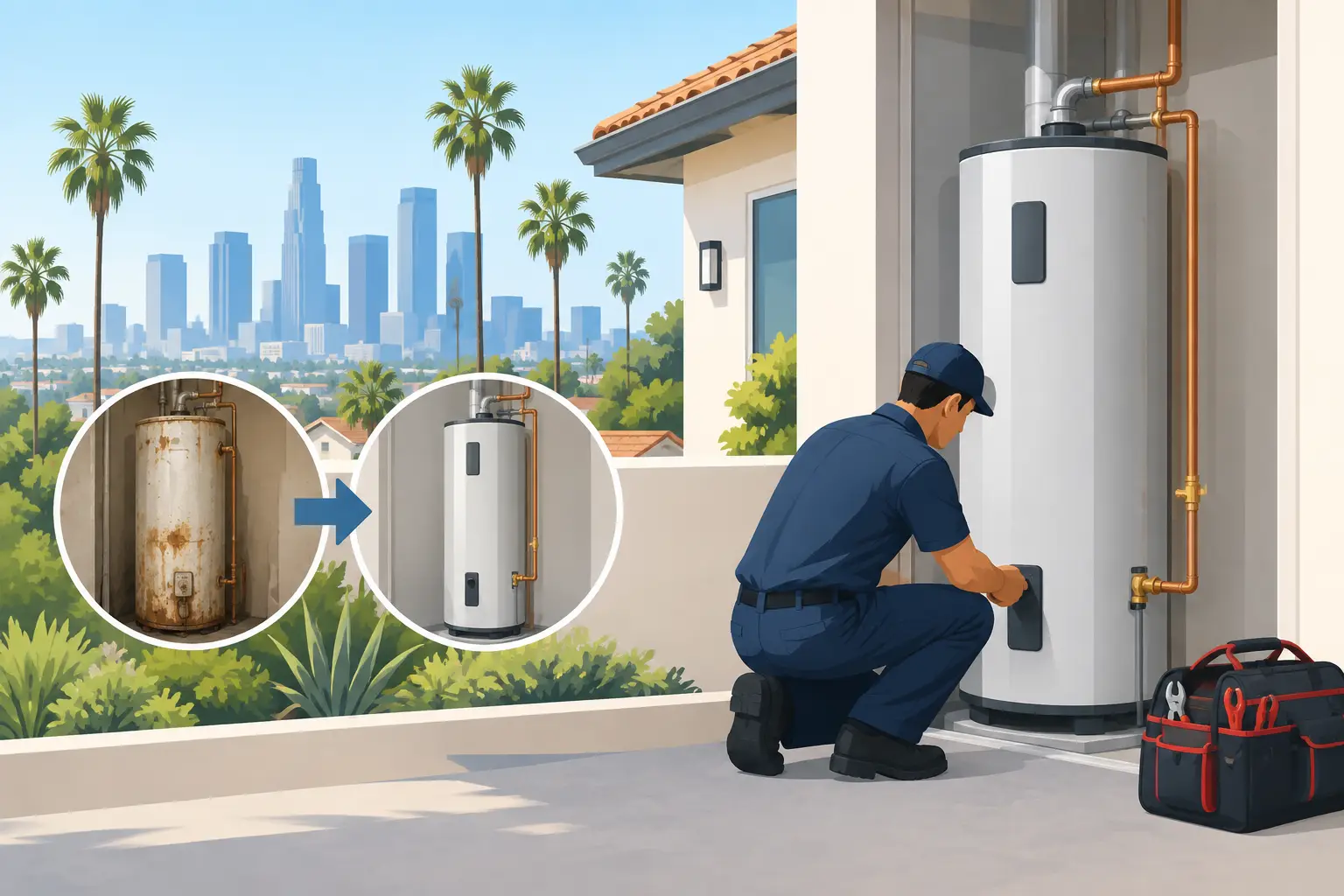
A failed water heater rarely gives a homeowner much time to research. In this water heater replacement case study, an Los Angeles County homeowner faced a leaking 50-gallon tank, no reliable hot water, and three very different quotes. The deciding factor was not the lowest number. It was finding a licensed plumber who could explain the scope, meet local code requirements, and provide a clear installation plan without sales pressure.
This is a representative local scenario, not a promise of a particular price or timeline. Actual replacement costs vary by water heater type, access, permit requirements, venting conditions, and the condition of existing plumbing.
The Service Call: A Leaking Tank in Los Angeles
The homeowner lived in a two-story single-family home in the San Fernando Valley. The existing natural-gas water heater was installed in a garage utility area and was about 13 years old. Rust-colored water had appeared at a nearby drain, followed by a slow leak from the lower part of the tank.
The homeowner initially considered repairing it. That can make sense when the issue is a failed temperature and pressure relief valve, a connection leak, or a replaceable component. In this case, however, the leak appeared to come from the tank body itself. Once a tank has corroded through, replacement is usually the practical option.
There was no active flooding, but the homeowner shut off the water supply to the heater and called for same-day evaluations. The immediate goal was simple: restore hot water safely while avoiding an unlicensed, incomplete, or overpriced installation.
What the Plumbers Found
Three local plumbing companies inspected the system. All agreed that the existing tank needed replacement, but their proposed scopes were not identical.
The first quote covered a basic like-for-like tank swap. It included removal of the old unit and installation of a new standard tank water heater. It did not clearly address the water heater pan, expansion tank, gas sediment trap, earthquake strapping, vent connection, or whether a permit would be required.
The second quote was lower, but the description was limited to a single line: “Replace 50-gallon water heater.” The company could not provide a California contractor license number before scheduling, and the estimate left the homeowner unsure about disposal, warranty registration, and possible added charges after work began.
The third plumber provided a written scope after inspecting the site. The technician explained that the replacement would likely require updated seismic strapping, a properly routed drain pan line, a new flexible gas connector, and review of the venting connection. The quote also separated standard installation from possible extras, such as unexpected vent repair or water-line modifications.
That level of detail did not automatically make the third quote the right choice. It did, however, give the homeowner a meaningful way to compare bids. A water heater quote should describe more than the appliance. The installation details often determine whether a lower initial price stays low.
Why code-ready work mattered
Los Angeles-area homes have a wide range of water heater setups. A garage installation may have different clearance, drainage, seismic, combustion-air, and elevation considerations than a closet installation in a condo or a unit located in an attic. Local rules and permit processes also vary by city and jurisdiction.
For this property, earthquake safety was a major concern. California water heaters generally need secure strapping to help prevent movement during seismic activity. The installer also needed to verify that the temperature and pressure relief discharge pipe was correctly routed and that the new unit was appropriate for the existing gas and venting arrangement.
The homeowner did not need a lecture on every code section. They needed documentation that the plumber had looked at the complete installation rather than treating the job as a quick appliance exchange.
Comparing the Quotes Beyond the Price
The homeowner used five practical checks before selecting a contractor: active licensing, written scope, public review signals, warranty clarity, and availability.
License verification came first. For a conventional plumbing water heater replacement, the homeowner looked for an appropriately licensed California contractor, commonly a C-36 plumbing contractor, and confirmed that the license was active. This helps protect consumers, but it should not replace checking the estimate, insurance information when appropriate, and the contractor’s experience with the specific type of installation.
Next came the scope of work. The selected estimate identified the unit size and fuel type, removal and haul-away, installation materials, safety components, expected code updates, and whether permitting would be handled. It also explained what could change the price after inspection, rather than using a vague low starting price.
Review quality mattered more than a star rating alone. The homeowner looked for recent reviews that mentioned water heater work, communication, arrival windows, cleanup, and how the company handled follow-up issues. A company with real, detailed feedback and a consistent local service record offered more confidence than a profile with only a handful of generic reviews.
Finally, timing mattered. The family could manage for one night without hot water, but not for a week. The chosen plumber had the appropriate unit available and could complete the work the next morning, pending final confirmation of the installation requirements.
The Chosen Replacement and Installation
The homeowner selected a comparable 50-gallon natural-gas tank water heater rather than switching to tankless. A tankless unit can be a strong choice for some households, especially where space savings or continuous hot water are priorities. But it can require larger gas piping, electrical work, new venting, and a higher upfront investment.
For this household, the existing tank met demand, the installation location had room for a replacement, and the priority was dependable restoration with manageable cost. A like-for-like tank replacement was the better fit.
On installation day, the plumber drained and removed the old heater, installed the new unit, replaced required connection components, secured the unit with seismic straps, and checked the gas and water connections. The technician tested burner operation, confirmed hot-water delivery, reviewed the shutoff locations, and explained basic maintenance expectations.
The final invoice matched the written estimate because no hidden venting or piping issue was found. That outcome is not guaranteed on every job. Older homes can reveal corroded valves, undersized gas lines, damaged venting, or drainage problems once the old unit is removed. The important point is that the estimate anticipated these possibilities and established how they would be handled.
What This Water Heater Replacement Case Study Shows
The homeowner did not choose the cheapest quote or the most polished sales pitch. They chose the provider that made the work understandable and verifiable.
For Los Angeles homeowners and property managers, that means asking a few direct questions before approving the job. Is the contractor properly licensed? Does the quote identify the water heater model or specifications? Are haul-away, materials, safety updates, and permit handling included or clearly excluded? What conditions could create an added charge? Is the installer experienced with your location, whether that is a garage, closet, attic, condo, or multi-unit property?
A clear answer to those questions can prevent common disputes after the work begins. It also helps you compare estimates fairly. One quote may appear higher because it includes the components another contractor has left out.
When a Repair May Still Be Worth Considering
Replacement is not always the immediate answer. If the tank is relatively new and the problem involves a faulty thermostat, pilot assembly, valve, or external connection, a repair may be reasonable. The same applies to some electric water heater issues involving heating elements.
A qualified plumber should be able to explain whether the problem is repairable, how long a repair is likely to last, and whether the cost makes sense compared with replacement. Be cautious if a contractor recommends full replacement without identifying the source of the issue, particularly when there is no visible tank corrosion or active tank leak.
For a leaking or aging tank, though, delaying replacement can create a larger cleanup and property-damage risk. If water is actively escaping, turn off the water supply to the heater if it is safe to do so and contact a licensed local plumber promptly.
The best water heater decision is rarely about finding the fastest quote. It is about finding a trusted, verified professional who can explain the work, document the price, and leave your home with safe, reliable hot water.
Get a free quote from a local plumber
Tell us what you need. Vetted plumbers in your area will reach out, usually the same day. No cost, no obligation.
Related Articles
Is Trenchless Sewer Worth It for LA Homes?
Is trenchless sewer worth it? Compare costs, limits, and long-term value for Los Angeles homes before choosing a licensed local plumber with confidence.
Best Plumbers for Apartment Buildings in LA
Find the best plumbers for apartment buildings in Los Angeles County. Compare verified licenses, real reviews, specialties, and emergency availability.
Emergency Plumber Response Time Example Explained
See an emergency plumber response time example for Los Angeles, learn what affects arrival, and choose a licensed pro without delays or surprises.
Need a Plumber in Los Angeles?
Compare 112+ verified plumbers with real reviews from Google and Yelp.
Find a Plumber Near You