August 11, 2026
Why Does My Sewer Smell? Causes and Next Steps
Why does my sewer smell? Find common causes, safe checks, and signs Los Angeles homeowners need a licensed plumber for prompt, reliable local help today.
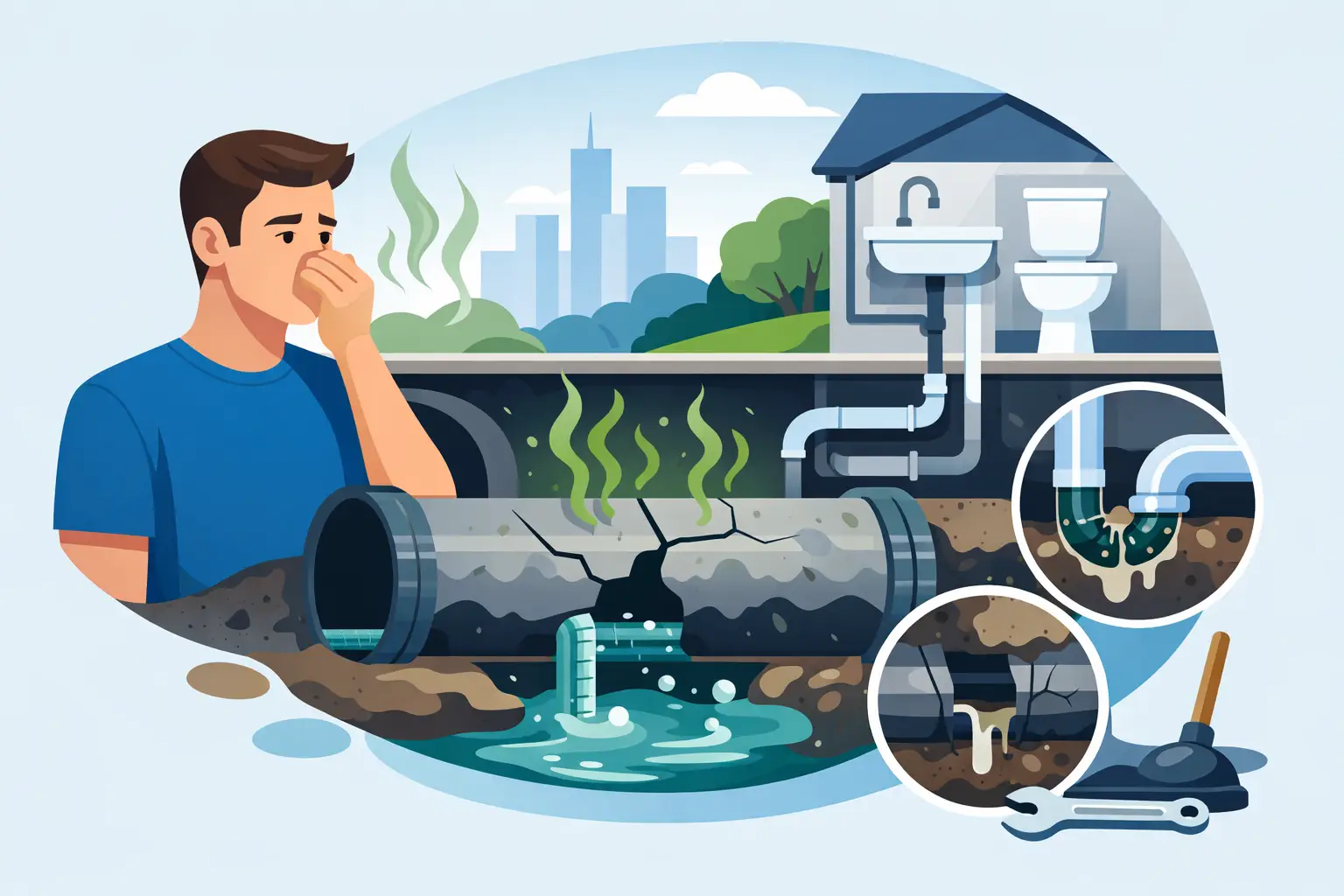
A sewer odor is more than an unpleasant house problem. If you are asking, “why does my sewer smell,” the answer may be as simple as a dry drain trap or as urgent as a damaged sewer line. The location, timing, and strength of the odor are useful clues, but persistent sewer gas should not be ignored.
In Los Angeles County, long dry stretches, older homes with aging drain lines, and mature tree roots can all contribute to sewer-related issues. Start with the safe checks below, then contact a licensed plumber promptly if the smell returns, spreads, or comes with drainage problems.
First, know when a sewer smell needs urgent help
A brief odor after a drain has been unused is usually less urgent than a smell that is strong throughout the home. Leave the area and call for professional help promptly if sewer odor is overwhelming, you hear gurgling from multiple fixtures, wastewater is backing up, or anyone feels dizzy, nauseated, or develops a headache.
Do not use open flames, smoke, or repeatedly run appliances near a strong suspected gas odor. Sewer gas can contain methane and hydrogen sulfide, among other gases. Open windows if it is safe to do so, keep people and pets away from the affected area, and arrange an inspection. If you suspect a natural gas leak rather than a drain or sewer issue, leave the property and contact your gas utility or emergency services from a safe location.
Why does my sewer smell inside the house?
The source is often a missing water seal, a leak around a fixture, or a blockage affecting the drainage system. A qualified plumber can isolate the cause without guesswork, but these are the most common possibilities.
A dry P-trap is letting sewer gas through
Most sinks, tubs, showers, and floor drains have a curved section of pipe called a P-trap. It holds water, creating a barrier between your home and the sewer system. In a rarely used guest bathroom, laundry drain, floor drain, or vacant unit, that water can evaporate.
If the odor is limited to one drain, slowly pour a few cups of water into it. For an infrequently used drain, a small amount of mineral oil after adding water can slow evaporation. If the smell disappears but returns quickly, the trap may be leaking, improperly installed, or affected by a venting issue.
A toilet seal may have failed
A toilet is sealed to the drain pipe with a wax ring or similar gasket. When that seal fails, sewer gas can escape around the base even if the toilet still flushes. You may notice odor near the toilet, moisture at the base, a rocking toilet, or staining on the floor.
Do not simply caulk over the problem. A loose toilet can damage flooring and allow odor or water to reach areas you cannot see. A plumber can reset the toilet, replace the seal, and check the flange beneath it.
Drain buildup is producing a foul smell
Not every bad drain odor comes directly from the sewer. Hair, soap residue, food waste, grease, and bacteria can collect in a sink, shower, garbage disposal, or overflow opening. This smell is often strongest when water runs, particularly at a kitchen sink or bathroom vanity.
Remove visible debris and clean accessible drain components with a mild cleaner. Avoid using repeated doses of harsh chemical drain openers. They may damage older piping, create hazards for the person servicing the drain, and rarely solve a deeper blockage. If the drain is slow or the odor persists after cleaning, professional drain service is the safer next step.
A blocked plumbing vent is disrupting drainage
Your plumbing vents extend through the roof and help drain water move properly while keeping trap seals intact. Leaves, nests, debris, or damage can block a vent. The result may be gurgling toilets, bubbling sinks, slow drainage, or sewer odor that seems to appear after flushing.
Roof access is not a good DIY repair for most homeowners. It involves fall risk and requires identifying the correct vent opening. A licensed plumber can inspect the vent system and determine whether the problem is a simple obstruction or a larger drainage issue.
A sewer line clog, break, or root intrusion is developing
If more than one fixture drains slowly, the lowest drains in the home back up, or sewage appears in a tub or shower when a toilet flushes, the main sewer line may be blocked. In older Los Angeles neighborhoods, tree roots can enter joints or cracks in aging clay, cast iron, or Orangeburg sewer pipes. Ground movement, corrosion, and pipe deterioration can also create openings or bellies that collect waste.
This is not a situation to wait out. Continued use of water can turn a partial blockage into an indoor sewage backup. A plumber can use a sewer camera inspection to identify roots, grease buildup, a collapsed section, or another obstruction. Depending on the pipe condition, options may include drain cleaning, hydro jetting, spot repair, or trenchless sewer repair. The right choice depends on the camera findings, not a one-size-fits-all recommendation.
A damaged cleanout cap or outdoor drain is releasing odor
The sewer cleanout is an access point, often located near the exterior of the home. A loose, cracked, or missing cap can release sewer odor outdoors and sometimes near open windows or doors. A broken outdoor drain, improperly sealed connection, or issue near a septic system can create a similar smell.
Avoid opening a cleanout yourself if drains are already backing up. Pressure in the line can release wastewater suddenly. A plumber can inspect the cap, check for blockage, and determine whether the odor is coming from your private line or another source.
How to narrow down the source safely
Before scheduling service, notice where and when the smell appears. Is it strongest in one bathroom, under a kitchen sink, near the laundry area, outside by the cleanout, or across the entire property? Does it happen after a shower, after flushing, during hot weather, or only when a guest bathroom has been unused?
Also check whether the problem is affecting one fixture or several. One smelly but normally draining sink often points to a local drain or trap issue. Multiple slow drains, gurgling, or backups point more strongly to a vent or main sewer line problem. These details help a plumber arrive prepared and can reduce time spent diagnosing the issue.
Property managers should ask residents whether other units are affected. In a multi-unit building, a shared line or stack problem can require a different response than an issue inside one apartment. Document visible backup, water damage, and the fixtures involved, but do not attempt to clear sewage with household chemicals.
What a licensed plumber should check
For persistent odors, the best next step is a focused diagnosis. A professional may inspect fixture traps and toilet seals, test drainage flow, examine accessible piping, and assess the cleanout. If the symptoms suggest a main line issue, a camera inspection can show the condition of the pipe from the inside.
For difficult or intermittent odors, smoke testing may help locate leaks in drain, waste, and vent piping. This can be especially useful when the smell is present but there is no obvious backup. Ask what testing is recommended, why it is needed, and whether the estimate includes the inspection and any follow-up repair.
When comparing Los Angeles plumbers, verify an active California license, look at real review history, and confirm experience with the suspected problem. A drain cleaning specialist may be appropriate for a routine clog, while recurring backups or aging sewer pipes call for a provider experienced in camera inspections and sewer repair. The Plumbing Connection helps local homeowners compare verified plumbers by specialty, service area, reviews, and emergency availability without a middleman.
Preventing sewer odors from coming back
Run water in unused sinks, showers, tubs, and floor drains every few weeks, especially during dry weather or before and after travel. Keep grease, wipes, paper towels, and hygiene products out of drains, even when a product is labeled flushable. They can catch on roots or rough pipe interiors and create expensive blockages.
If your home has older sewer piping or large trees near the sewer route, periodic camera inspections can be worthwhile after recurring clogs. It is not necessary for every home, but it can prevent surprises when there is a history of roots, slow drains, or prior sewer repairs.
A sewer smell is your plumbing system asking for attention. If basic trap refilling does not solve it quickly, choose a trusted, licensed local plumber who can identify the source before a small odor becomes a backup, repair, or property damage claim.
Get a free quote from a local plumber
Tell us what you need. Vetted plumbers in your area will reach out, usually the same day. No cost, no obligation.
Related Articles
Is Trenchless Sewer Worth It for LA Homes?
Is trenchless sewer worth it? Compare costs, limits, and long-term value for Los Angeles homes before choosing a licensed local plumber with confidence.
Best Plumbers for Apartment Buildings in LA
Find the best plumbers for apartment buildings in Los Angeles County. Compare verified licenses, real reviews, specialties, and emergency availability.
Emergency Plumber Response Time Example Explained
See an emergency plumber response time example for Los Angeles, learn what affects arrival, and choose a licensed pro without delays or surprises.
Need a Plumber in Los Angeles?
Compare 112+ verified plumbers with real reviews from Google and Yelp.
Find a Plumber Near You